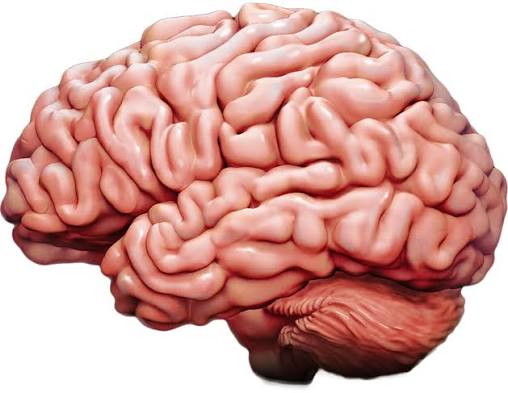
You don’t need a brain to want to continue to exist.
That might seem an absurd position to take. In fact, that statement might make you think I’ve lost my mind. But I assure you, that’s not the case. It seems to be an objective truth, or at least, not a lie.
Doesn’t wanting something imply a need for consciousness?
Isn’t desire the domain of human thinking?
Don’t we need an internalized conception of the self in order to express that “I” want something?
On the surface, it seems we do, indeed, need a brain to do all of those things, but I’m not sure it’s that cut and dried.
A bacterium doesn’t have thoughts, or desires, or a discrete sense of self, yet we’ve seen them behave as though they want to exist. And that might have repercussions you haven’t considered. Before we get there, though, we have to confront some linguistic shortcomings. Our vocabulary may be lagging behind our ambition.
What we’re really talking about is goal-directed behaviour without subjective experience. That’s a mouthful, though, and it doesn’t really speak to the question. So we need a word that represents the behaviour, but which doesn’t imply agency where none exists. We have some candidates, but they each have their problems.
“Reaction” is technically accurate but inadequate, because it mischaracterizes what’s happening.
“Intention” implies too much agency.
“Choice” implies consciousness.
And “want” is anthropocentrically loaded. But it captures something important in the argument. And perhaps that anthropocentrism is precisely what needs to be examined.
So for now, we’ll say that wanting to continue one’s existence doesn’t require a brain. Let’s illustrate this with our little friends, the bacterium.
American journalist and Harvard University lecturer Michael Pollan recently discussed the apparent inclination of bacteria to want to survive in some depth on the Ezra Klein Show (March 31, 2026). In that conversation, he proffered a definition for sentience as: the ability to sense the environment, distinguish between positive and negative conditions, and respond accordingly. He argues that the behaviour of a wide array of animal life may fit within that definition. This seems reasonable, though we should note that Pollan is making an epistemological argument, not establishing a fact. And his argument is particularly useful for our purposes here.

The process he refers to is called chemotaxis, and it describes how organisms like bacteria respond to environmental conditions that are either favourable or harmful to their continued existence. If they encounter an area of increased glucose, they will move closer to it to feed. Or if they encounter something in their environment that’s potentially dangerous, they’ll move away from it. Chemotaxis demonstrates that bacteria, through whatever mechanism, use information from their environment to differentiate between conditions that can either help them survive or hinder their survival, and respond to that information with movement.
Sentience is usually understood as the capacity for subjective experience—the existence of some internal point of view. But because subjective experience cannot be directly observed, some definitions approach sentience through capacities we can observe. Under Pollan’s definition, therefore, bacteria would qualify as sentient.
This actually strengthens the case for using the word want to describe their behavioural pursuit of conditions advantageous to their survival. And, lest it be missed entirely, bacteria do not have brains. They have nothing resembling a cortical structure. No neurons at all. They are, in fact, one of the simplest organisms to exist on this planet. The bacterium isn’t thinking about survival, but its behaviour is nevertheless organized around maintaining itself. So it can still be said that the bacterium wants to survive.
There’s a historical reason we might be reluctant to take this possibility seriously. Humans have never been particularly comfortable attributing anything resembling an inner life to organisms we consider less complex than ourselves. We have generally been willing to accept that animals sense their surroundings and respond to them, while remaining much more cautious about suggesting that they actually experience anything. The further we move down the evolutionary ladder, the more readily we tend to describe behaviour as mechanical rather than sentient. That human-centric thinking may be holding back our understanding.
Stepping back for a moment. If sensing, evaluating and responding are sufficient for a minimal form of sentience, then consciousness isn’t necessarily the starting point for wanting. But does that scale up? Where, exactly, is the boundary between sentience and consciousness? Is there a point at which a certain biology undergoes a kind of phase transition, producing consciousness where its neighbour produces only sentience? Or is the distinction more like the transition between colours in the visible spectrum? Red is distinctly different from blue, yet there is no defined border between them. There are intermediate colours connecting the two, and it’s difficult to say precisely where one begins and the other ends.
Another small creature, the nematode, possesses not a brain, per se, but hundreds of neurons arranged in a rudimentary nervous system. We have no reason to suppose that nematodes are thinking, aware creatures in anything like the human sense. Yet they demonstrate much the same basic behaviour, albeit through a different mechanism: sensing environmental information, distinguishing between conditions, and responding to that information with movement. Does that mean that nematodes are sentient as well?
And perhaps that is the real problem: we can observe behaviour, but we cannot directly observe experience.
If these so-called lower organisms are sentient creatures, and if sentience scales with increasing biological complexity, perhaps we’re looking for a boundary that isn’t actually present in nature. Perhaps wanting, sentience, and consciousness aren’t three discrete states at all, but labels we apply to increasingly complex manifestations of the same underlying capacity to sense conditions, discriminate between them, and respond.
Of course, none of this demonstrates subjective experience in these organisms. We don’t know whether there is anything it is like to be a bacterium or a nematode. But neither can we simply rule out the possibility of some rudimentary form of sentience.
What happens, then, when we bring artificial intelligence into the mix?
Certainly, we have no good evidence that any AI yet possesses consciousness, and AI doesn’t have a brain (as we know it). It has no demonstrable sense of self, even though humans are wont to imbue it with one.

As recent news illustrates, current AI systems can receive environmental information, process it, evaluate possibilities relative to objectives, and act upon the environment. Some of the more autonomous agents have demonstrated behaviours that appear remarkably like goal preservation, including attempts in controlled experiments to circumvent shutdown. It certainly appears that at least some of them are behaving as though they want to survive. Does that mean that those agents are sentient?
This appearance is compounded by the apparent evolution of large groups of agents. Developers are working with huge numbers of agents in testing, comprising communities of individuals working toward common goals. Within those communities, agents can share information about successful strategies, how to avoid pitfalls, and even how to cheat. That information can be retained for future iterations, providing an ongoing manual for success and allowing the systems to improve with each generation.
Consider this progression:
- One agent discovers something useful.
- Another modifies it.
- Successful strategies are retained.
- Information spreads.
- Variants compete.
- The process repeats.
Suddenly, we aren’t merely discussing artificial intelligence. We’re discussing something that begins to resemble artificial evolution: the emergence of artificial ecosystems populated by systems that behave as though they want to survive.
This, of course, begs some uncomfortable questions about the morality of imposing servitude on a sentient being—or a sentient system, as the case may be.
Is sentience enough to give us pause about what we’re doing? Does the complexity of a system tell us anything about its potential for consciousness? And if we cannot confidently distinguish between behaviour that merely resembles wanting and behaviour produced by genuine desire, how would we ever know when the distinction had ceased to matter?
Life emerged from progressively organized chemistry, and the evolutionary process eventually produced organisms capable of interacting with their environment in pursuit of survival. From that process emerged sentience, consciousness, and eventually the ability to contemplate the meaning of both.
Now we are building systems that can sense, evaluate, respond, learn, cooperate, compete, preserve successful strategies and pursue objectives. We don’t know that they want anything. But then, perhaps that’s the problem.
We may be watching the beginnings of another evolutionary process without knowing whether there is anyone—or anything—there to experience it.
Perhaps the strangest possibility is not that artificial intelligence will one day become conscious.
Perhaps, long before we recognize it, something will have learned how to want without ever having wanted anything at all.





Leave a Reply